
Teachers footing the bill as resources dwindle
Reprinted with permission from the Claremore Progress. This article originally appeared on Jun 21, 2016. Support local journalism with a subscription or a day pass for $1.99 :)
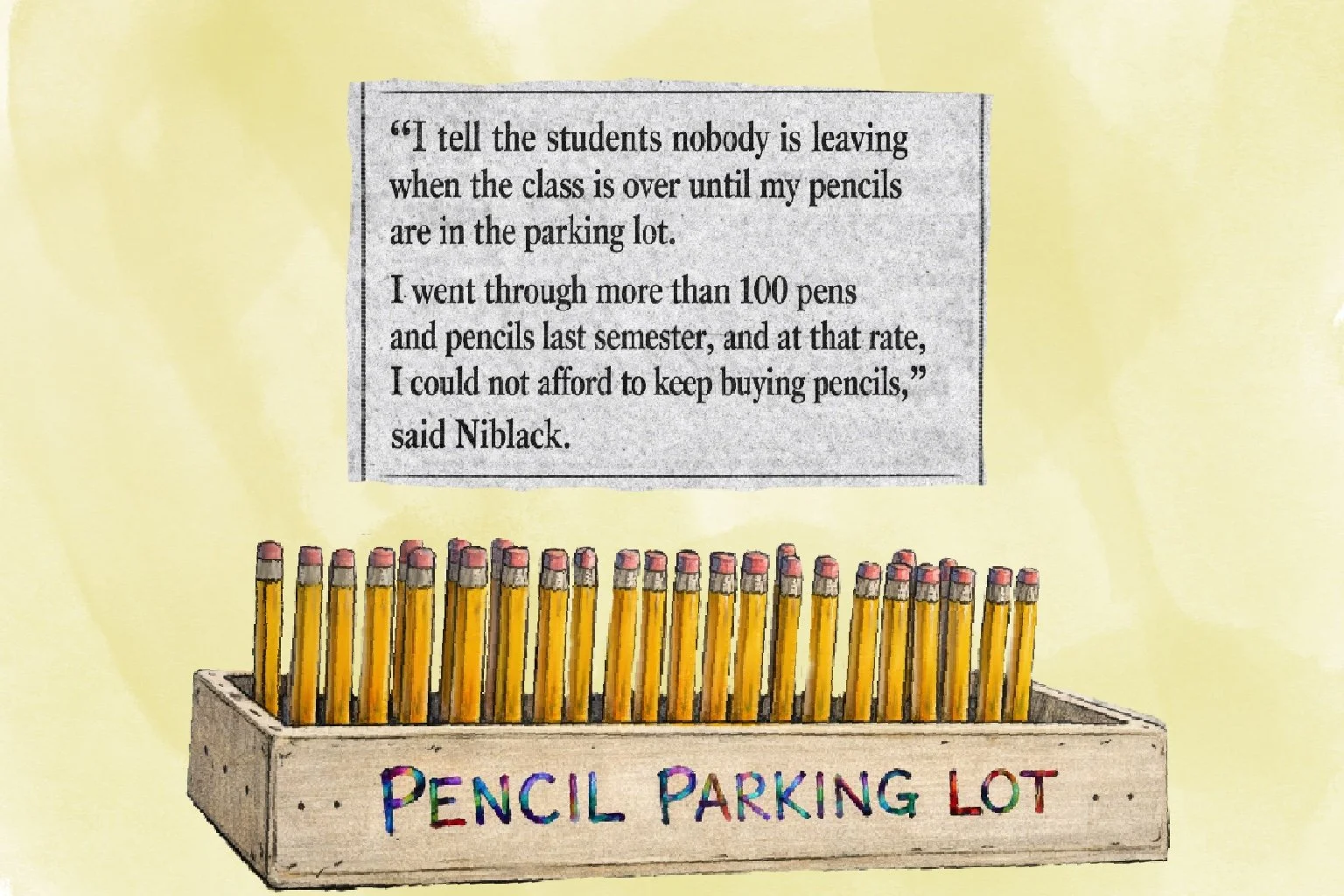
A plastic “pencil parking lot” sits on Tracy Niblack’s desk in her classroom. She is a Claremore Junior High School math teacher and she hopes the innovation will help her keep her classroom supplied a little longer.
“I tell the students nobody is leaving when the class is over until my pencils are in the parking lot. I went through more than 100 pens and pencils last semester, and at that rate, I could not afford to keep buying pencils,” said Niblack.
She said nearly everything in her classroom, except the furniture and a computer, she purchased. Over 40 percent of one month’s income, which is nearly $800, is dedicated to buying supplies for her classroom for a year. She said some teachers spend less and other teachers spend much more to keep basic necessities.
“Even before the cuts there were very little supplies provided by the district because they can’t afford it. I don’t know how we can cut more supplies. Fortunately, I have some great parents with kids in my classroom,” she said. “One parent bought graph paper and another computer paper. If we run out of certain supplies, it means there are no more worksheets or handouts.”
Niblack started in 1999, and she said it was much different in the early 2000s in Oklahoma.
“If I needed red pens to grade, I could go up to the front office and ask. If I asked now, we might have a couple of pens or pencils left in the back of a closet somewhere,” she said.
Niblack said she is grateful for corporate sponsors, but as a strong believer in public education she is also heartbroken the state has put the teachers in a position of asking private corporations to fund education.
“It is incredibly insulting to my profession. The state legislators are saying my job and these students are not worth the money that is needed to invest in them,” she said.
There is also a shortage of classroom textbooks. Niblack said free access to online textbooks and workbooks helps her students complete their homework, but she is concerned about how long those resources will remain affordable to the classroom.
Niblack said she spent a few years teaching in Missouri, and she said Oklahoma uniquely devalues the classroom.
“I love teaching. I understand we are in a budget crisis, but this is a man-made budget crisis of bad decisions made by the state legislators over years. I can’t handle being told every day that what I do is not important,” she said. “If I needed supplies in Missouri, we were supplied. If I presented a professional development opportunity that would help the classroom, I went.”
In contrast, in Oklahoma she personally paid $1,500 to attend a professional development conference. She said professional development helps teachers be strategic in the classroom and allows teachers across the country to collaborate on curriculum.
She also received a 36 percent pay cut by teaching in Oklahoma in comparison to Missouri.
“Missouri supports education. I looked at my old check stubs and contracts and I really make $20,000 less a year than I did teaching in Missouri,” she said.
A college degree, 15 years of experience and 18 hours of continuing education equals about $37,000 in Oklahoma. Niblack said after insurance and retirement her actual pay is about $27,000 a year before taxes.
Moving forward, Niblack expects her classroom size to increase by four or five more desks. “I have no idea where I will put more desks in my classroom,” she said. “Our state legislators keep asking us, what is one more kid in the classroom. Teachers have been asked that since 2009.”
Bigger classes mean less one-on-one instructional time. To compensate, Niblack stays late and arrives early to help students who need additional instruction.
Oklahoma’s budget cuts leave Niblack questioning her decision to be a teacher.
“Is this really what I want to do for the rest of my life? Not because I don’t love it, but because I don’t know if I can tolerate it,” she said. “I am heartbroken about what is happening to education in this state.”
Editor’s note: This is the second in a series of stories on the challenges local teachers face in the classroom during the current budget crisis.